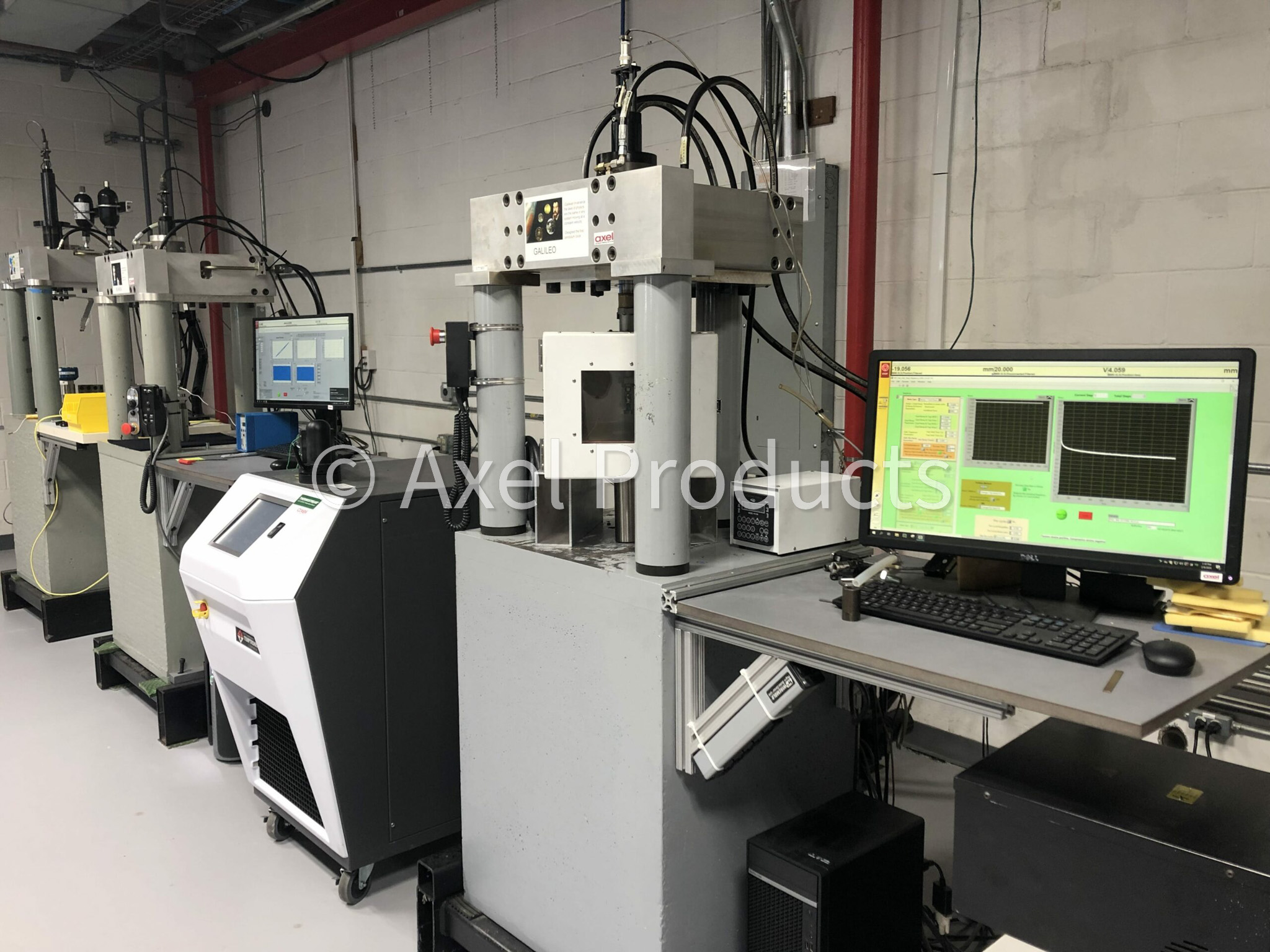
Elastomers are often the material of choice because of their viscoelastic behavior. They can act as shock absorbers for mounts. Elastomers can dissipate vibrational energy. So naturally we need to measure these viscoelastic behaviors in ways that allow us to simulate the intended applications.
Although we’d like to get right to measuring viscoelastic properties, we also need to make test data that allows us to calibrate stable material models that consider muti-axial loading, softening and set.
A test plan to characterize viscoelastic properties typically looks like this:
Uniaxial tension test
Planar tension (pure shear test)
Equal biaxial extension test
Volumetric compression (Bulk Modulus) test
Viscoelastic Characterization: Step tests or tests at various rates or dynamic vibration
Material models in commercial codes allow us to combine hyperelestic, bulk, softening (Mullins), set (plasticity) and viscoelastic behaviors in a single material model.
Step Experiments
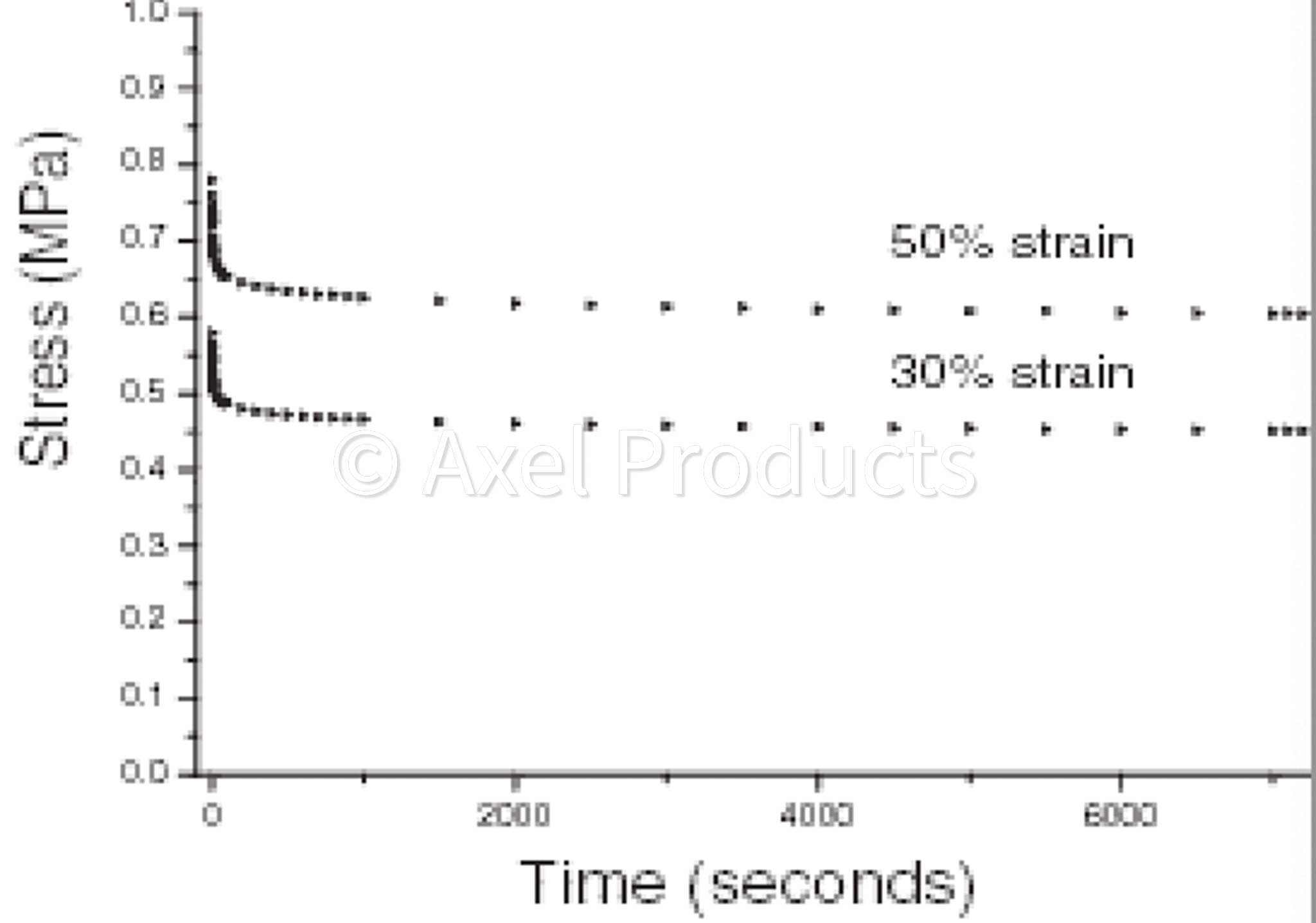
If an elastomer is stretched to a particular strain and held, the stress in the elastomer will decrease over time. This decrease in stress over time is referred to as stress relaxation. This reduction in stress can be a significant fraction of the initial stress. For many elastomers, the normalized shape of the stress-time function is relatively insensitive to the absolute strain level and to the strain state. This behavior is considered linear viscoelastic behavior and can provide a very capable representation of elastomer behavior. Simple stretch and hold experiments can capture this.
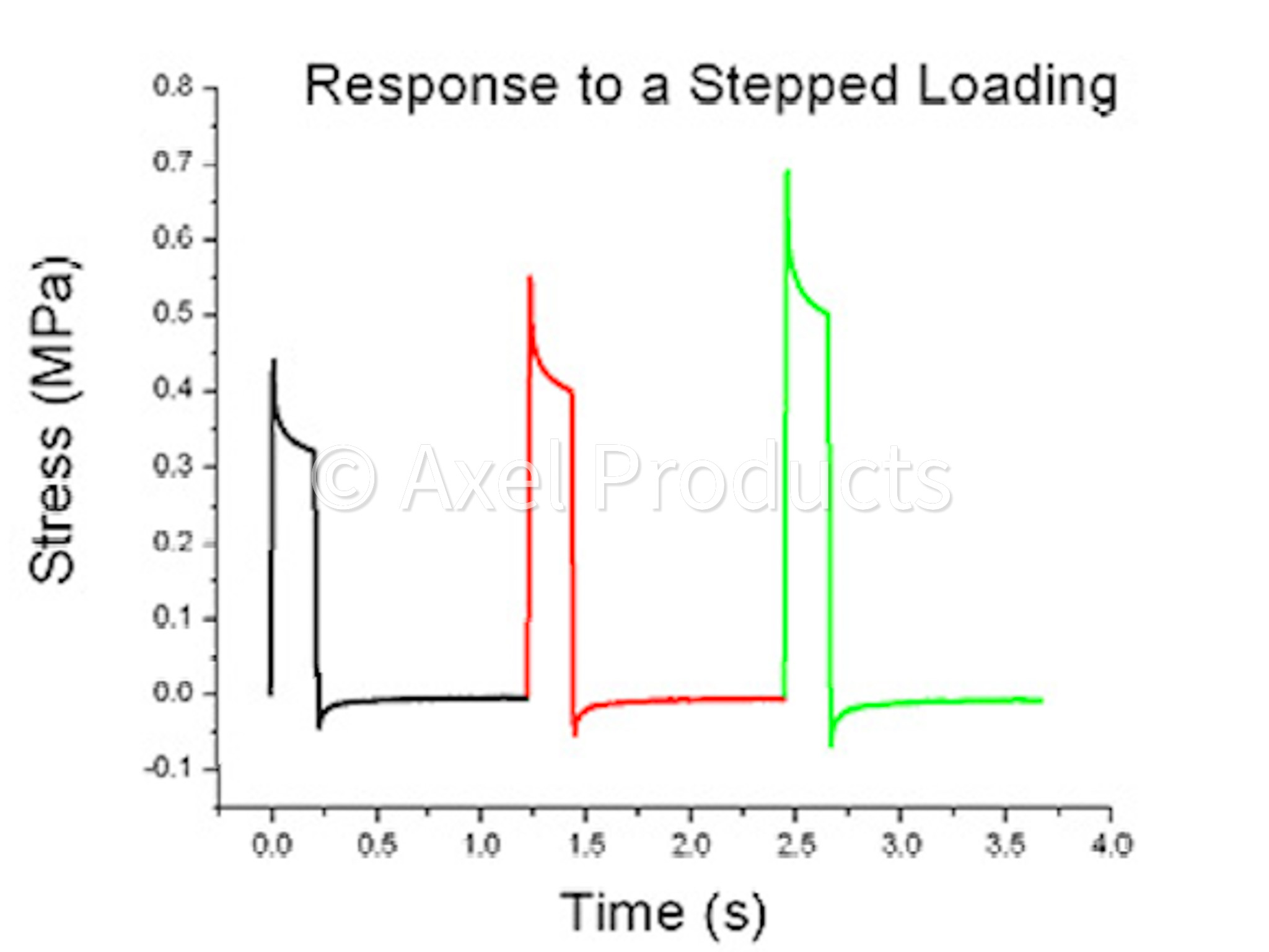
Sometimes a more precise representation of viscoelastic behavior is needed. A series of steps which capture loading, unloading, and strain holds can capture stress relation AND stress recovery behaviors. One might be concerned about the ability of a rubber seal to maintain a sufficient sealing force during an abrupt separation of 2 sealing faces. An experimental loading involving a series of load and unload steps might capture this behavior.
Large Strain Viscoelastic Measurements
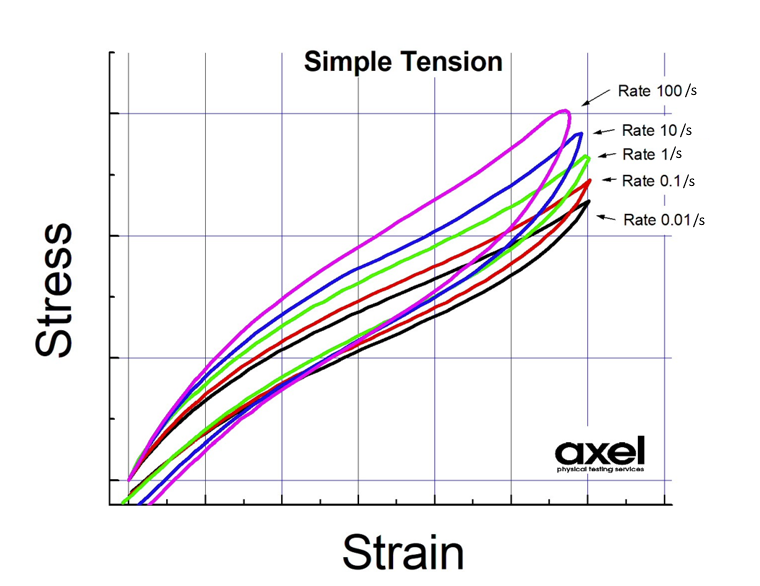
The response of a rubber part undergoing large strain oscillations at various rates cannot be predicted using small strain dynamic vibrations (DMA) data. The loading response is complicated and certainly not sinusoidal. Large strain experiments, surprise, are needed to predict large strain behaviors.
In this case, one test specimen is stretched to a set strain level at a series of increasing strain rates. The resulting stress-strain data during the loading-unloading at each rate is used to observe the effects of strain rate on the elastomer.
In practice, the sequence needs to be more complex because of other elastomer effects that include material softening, material heating and material set but it can be done.
Small Strain Dynamic Vibrations
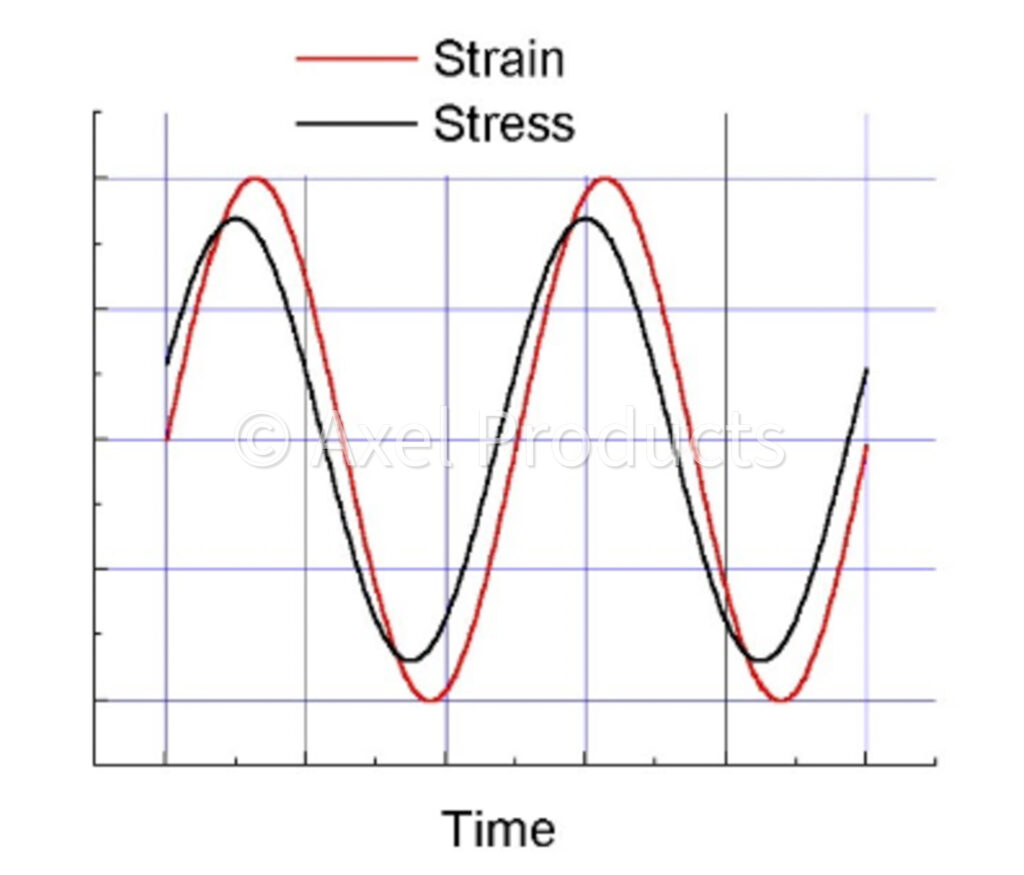
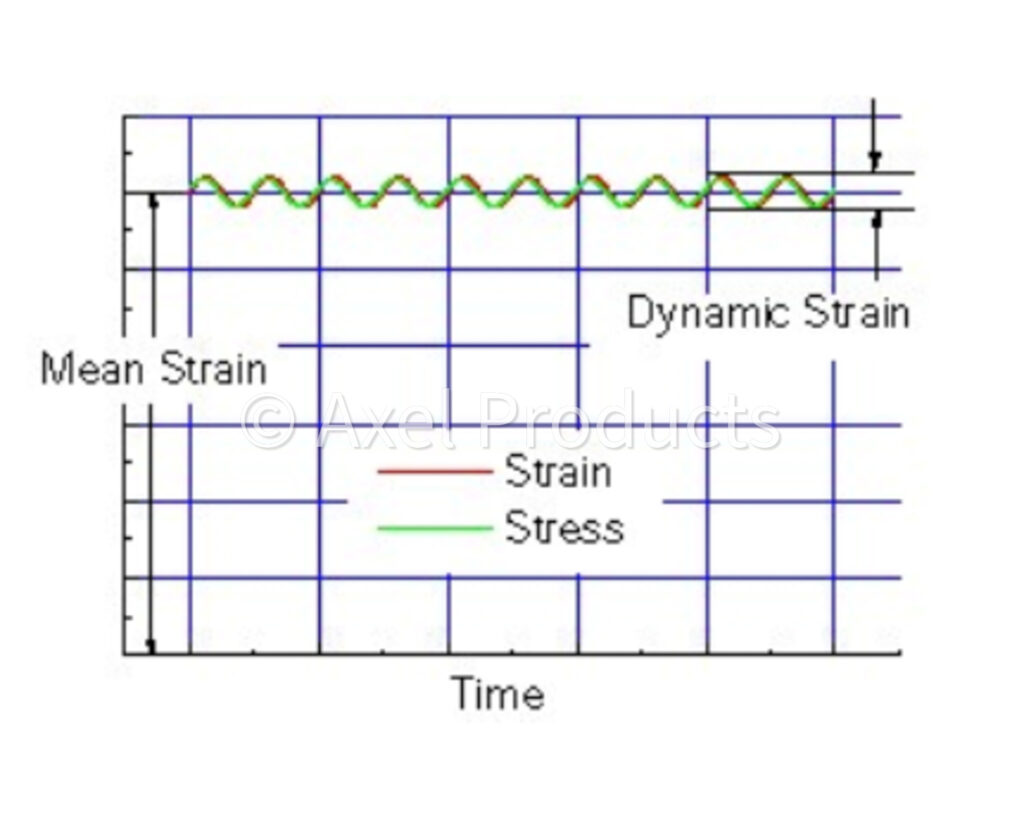
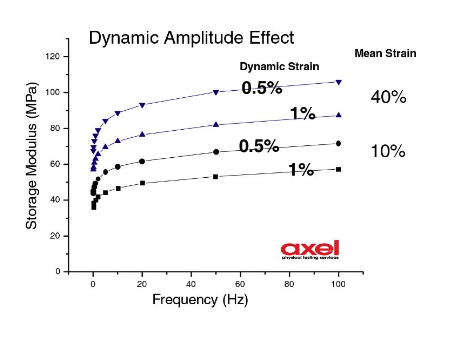
Elastomeric components often experience dynamic sinusoidal loading superimposed on a larger mean strain as shown herein. This is common for mounts, bushings and body seals. The response to the dynamic loading is such that higher frequencies result in higher stiffness values. However, for most engineered elastomers, the effects of mean strain amplitude and dynamic sinusoidal amplitude may be greater. As a result of this behavior, analytical predictions based solely on frequency or rate effects will fall short if the effects of mean strain and dynamic amplitude are ignored.
Acoustic Vibrations
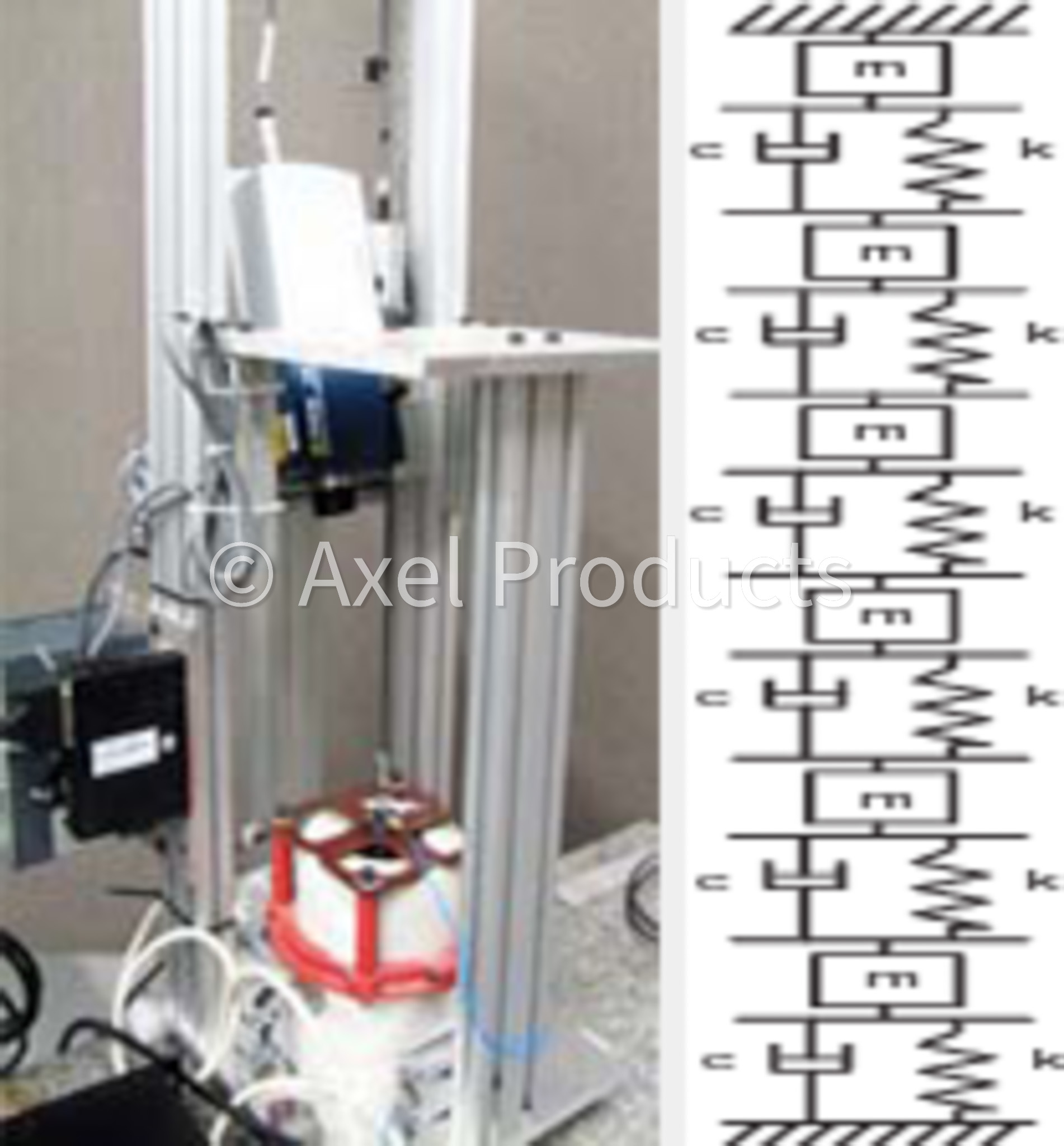
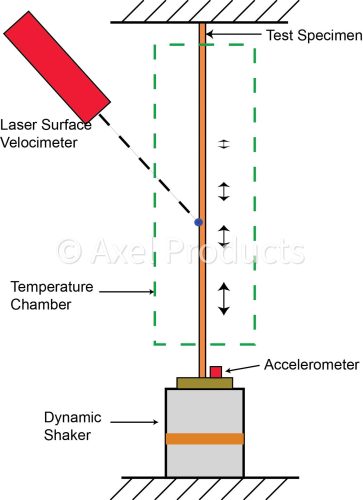
At frequencies above approximately 500 HZ, it may not be reasonable to measure dynamic material properties assuming a simple specimen model as shown above. The short wavelength and mass effects of higher frequency requires a different approach. One technique is to use an infinite length specimen technique whereby longitudinal waves are transmitted along a specimen greater than 300 mm in length. The wave speed and wave attenuation are then determined at points along the specimen to determine the dynamic properties using basic wave equations. This technique has been used at Axel Products for measurements between 500 Hz and 10,000 Hz.